
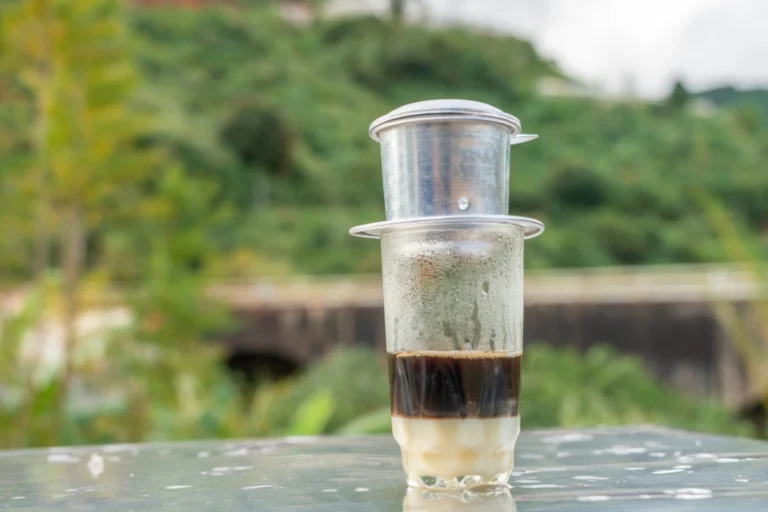
Vietnamese coffee shows up everywhere today… In cafés, on social media, and in travel videos. If you want to see if the hype is worth it, you may wonder how to make Vietnamese coffee at home. In this guide, you will discover exactly how to brew authentic hot Vietnamese coffee, plus tips to get the perfect flavor every time.
Key Takeaways
- Vietnamese coffee is defined by Robusta beans and the phin filter.
- Sweetened condensed milk is the traditional pairing because it balances Robusta’s strength with creamy sweetness.
- To make Vietnamese coffee at home, all you need is a phin filter, dark roast coffee, hot water, and condensed milk.
- You can still make Vietnamese-style coffee without a phin by using an espresso machine, moka pot, French press, Nespresso, or instant coffee.
What Is Traditional Vietnamese Coffee?
Traditional Vietnamese coffee is known for its bold flavor, slow-brew ritual, and rich sweetness. Its unique character comes from two essential elements: Robusta coffee beans and the phin filter.
Vietnam is one of the world’s largest producers of Robusta beans, which naturally contain more caffeine, stronger bitterness, and deeper roasted flavor than Arabica.
These traits make Robusta the perfect match for sweetened condensed milk, which became the signature pairing in Vietnam when fresh milk was scarce. The creamy, caramel-like sweetness of condensed milk balances the intensity of Robusta in a way no other ingredient does.
The brewing method is also unique. Vietnamese coffee is traditionally made with a phin filter, a small metal drip brewer that produces a concentrated, aromatic coffee similar to espresso in strength but smoother in texture.
If you want to dive deeper into the characteristics that define this drink, explore: What Makes Vietnamese Coffee Different
How to Make Vietnamese Coffee With a Phin Filter
Below is everything you need to know, from choosing beans to adjusting strength and avoiding common brewing issues.
Ingredients and Tools
- 2 to 3 tablespoons Vietnamese coffee, ideally dark roast Robusta
- 2 tablespoons sweetened condensed milk
- Hot water
Equipment
- A phin filter
- Heatproof glass or mug
- Kettle
- Spoon
Step-by-Step Instructions
Prepare your cup
- Add 2 tablespoons of sweetened condensed milk to the bottom of your glass or mug.
Set up the phin
- Place the phin plate on top of your cup.
- Add 2 to 3 tablespoons of coffee into the phin chamber.
- Gently shake to level the grounds, but do not tamp hard.
Place the filter press
- Put the gravity press or screw insert on top of the coffee.
- Press it down lightly so the grounds are evenly spread.
Bloom the coffee
- Pour a small splash of hot water over the grounds, just enough to wet them.
- Wait 20 to 30 seconds so the coffee can bloom and settle.
Fill with water
- Slowly fill the phin with hot water to the top.
- Put the lid on to keep the heat in.
Let it drip
- The coffee should drip slowly into the cup below.
- This usually takes about 4 to 5 minutes.
- If it pours too fast, the grind is too coarse. If it barely moves, it is too fine or tamped too firmly.
Stir and taste
- When the dripping stops, remove the phin.
- Stir the brewed coffee and condensed milk together until smooth and uniform.
- Taste and adjust. Add a little more condensed milk if you like it sweeter.
Serve hot
- Enjoy your Vietnamese coffee as it is, or sip it alongside breakfast or a sweet snack.
Vietnamese Coffee Grind Size
For the best phin brew, use a medium-coarse to medium grind. It should feel slightly coarser than espresso but finer than typical drip coffee.
How Long Does Vietnamese Coffee Take to Drip?
A proper phin brew should take 4-5 minutes.
- Good indicator: A steady drip every 1-2 seconds.
- Too fast will result in weak coffee.
- Too slow or stuck means the grind is too fine or tamped too hard.
How to Make Vietnamese Coffee Without a Phin
If you do not have a phin filter, you can still make a strong, Vietnamese-style coffee at home. While the flavor will not be identical, several common brewing tools can create a concentrated base that works well with sweetened condensed milk.
Here are the best alternatives:
1. Espresso Machine
This produces the closest flavor match because espresso is strong, concentrated, and works very well with condensed milk.
2. Moka Pot (Stovetop Espresso Maker)
A moka pot brews bold, pressure-style coffee that pairs beautifully with condensed milk.
This is the most traditional alternative to a phin.
3. French Press
Use a higher coffee-to-water ratio and steep 4 to 5 minutes for a stronger extraction.
The flavor is fuller and smoother, but still strong enough for Vietnamese-style coffee.
4. Strong Instant Coffee
Dissolve 1 to 2 teaspoons of dark roast instant coffee in a very small amount of hot water.
While it lacks the depth of a phin brew, it works for quick Vietnamese iced or hot coffee.
5. Nespresso or Capsule Machines
Use a dark roast or ristretto pod. The concentrated espresso-style base mixes well with condensed milk.
How to Make Vietnamese Coffee Without Condensed Milk
If you want a lighter or dairy-free version, you may be wondering how to make Vietnamese coffee without condensed milk. You can make alternative versions with the right substitutes. Just keep in mind that the flavor will change depending on what you use.
Best Alternatives to Condensed Milk
If you want to maintain the rich, balanced flavor of Vietnamese coffee, these options work best:
- Coconut condensed milk
- Oat condensed milk
- Almond or cashew condensed milk
Check out this blog post to learn more about what you can expect with these vegan substitutions.
Can You Make Vietnamese Coffee Without Condensed Milk at All?
Yes, but the drink will be very different from the traditional version. Vietnamese coffee without condensed milk tastes closer to a strong black coffee made with a phin. You will get:
- A deeper roasted flavor
- More noticeable bitterness
- A thinner texture
- A sharper finish
This version appeals to people who enjoy bold, dark coffee without sweetness. It is still authentic in the sense that you brew it with a phin and use Vietnamese coffee, but it no longer resembles the well known brew.
Special Variations to Try
Once you master the traditional hot Vietnamese coffee, you can explore several unique variations that highlight different textures and flavors. Each of these versions is based on the same strong coffee foundation but adds its own twist.
Vietnamese Egg Coffee
Vietnamese egg coffee is a rich, dessert-style drink made by whipping egg yolk with condensed milk until it becomes a thick, custard-like foam. This silky topping sits over strong coffee, creating a layered drink that tastes sweet, creamy, and almost like tiramisu.
There is also an iced version for warm days. If you want to try it, see our guide on Vietnamese iced egg coffee.
Salted Vietnamese Coffee
Salted Vietnamese coffee combines strong Vietnamese coffee with a lightly salted cream or milk foam. The salt enhances sweetness, reduces bitterness, and adds a smooth, balanced flavor.
This variation is great if you enjoy sweet drinks but want a more refined taste.
Vietnamese Coconut Coffee
Vietnamese coconut coffee blends bold, dark coffee with sweet coconut cream or coconut condensed milk. The result is creamy, tropical, and refreshing with just the right amount of sweetness.
It is especially popular in southern Vietnam and works beautifully as both a hot and iced drink.
How to Make Vietnamese Coffee in Large Quantities
If you want to serve Vietnamese coffee at a gathering, meal, or event, you may be wondering how to make Vietnamese coffee in large quantities without losing the strong, bold flavor that the phin is known for. The good news is that you have a few reliable options depending on how much you need to brew.
1. Brew Phin Coffee in Batches
This is the most authentic method, but it takes time. You can line up multiple phin filters and brew each one individually.
Tips for batching phin coffee:
- Use the same coffee dose in each phin for consistent flavor.
- Brew slightly stronger than usual, since you may add ice or milk later.
- Keep finished coffee warm in a thermos or insulated carafe.
2. Use a French Press for Larger Batches
A French press is the easiest way to make a bigger batch while keeping the coffee strong and full-bodied.
Why it works:
- Immersion brewing develops a deep, bold flavor similar to a phin.
- You can easily scale up to multiple cups at once.
How to use it:
- Use a higher coffee-to-water ratio (1:12 or 1:10) for Vietnamese-style intensity.
- Steep 4-5 minutes.
- Press slowly to avoid bitterness.
This is a great option for parties or family meals where you need 4-8 servings fast.
3. Use a Drip Coffee Maker for Bulk Brewing
A drip machine can make large quantities quickly, but you will need to adjust the strength to keep it tasting authentic.
Tips for stronger drip coffee:
- Use a dark roast or Robusta blend.
- Increase the grounds slightly to intensify the brew.
- Use less water than the machine’s full capacity for a more concentrated flavor.
Once brewed, serve it hot or mix it with condensed milk in a large pitcher for easy pouring.
FAQ
Does Vietnamese coffee make you poop?
Sometimes, yes. Vietnamese coffee is typically made with Robusta beans, which contain more caffeine and more chlorogenic acids than Arabica. Combined with a strong extraction from the phin, this can stimulate digestion more quickly for some people.
What’s the best way to make Vietnamese coffee at home?
Using a phin filter is the most authentic and reliable method. It produces the strong, concentrated drip needed for traditional Vietnamese flavor.
Can you make Vietnamese coffee with Arabica beans?
Yes, but the flavor will be smoother and less intense. Arabica works if you prefer a milder cup, though it will not taste like classic Vietnamese coffee.
Is Robusta required for authentic flavor?
Not required, but recommended. Robusta gives Vietnamese coffee its bold strength, higher caffeine, and distinctive roasted taste.
Can you reduce caffeine in Vietnamese coffee?
Yes. Use Arabica beans, reduce the coffee dose, or choose a medium roast. These adjustments soften both strength and caffeine levels.
How strong is Vietnamese coffee compared to espresso?
Vietnamese coffee is strong and concentrated, but an espresso shot has a higher caffeine concentration per ounce. However, Vietnamese coffee often feels stronger because it’s brewed with Robusta.